
Learning Meaningful Representations of Life (LMRL) Workshop @ ICLR 2026
Speakers & Panelists

Alex Tong
AITHYRA

Jean Philippe Vert
Bioptimus
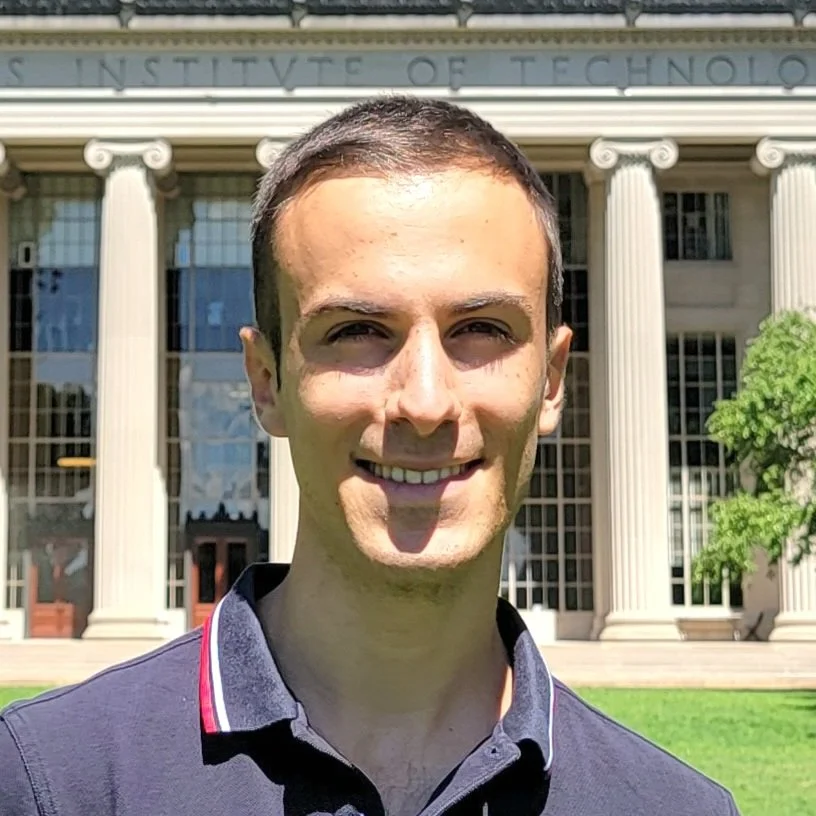
Gabriele Corso
Boltz

Patrick Schwab
GSK.ai

Daniel Burkhardt
Multiscale Biology at NVIDIA

Anton Osokin
Isomorphic Labs

Sara Jane Dunn
Relation Therapeutics

Ben Kompa
Lila Sciences
Tentative Schedule
OpeningOpening remarks
10 min
Keynote 1Flow matching for biology
35 min incl. Q&A
SpotlightsSpotlight talks
15 min total
Poster Session 1Poster session + coffee break (with ICLR)
60 min · Coffee 10:00–10:30
Keynote 2Towards Accurate Biomolecular Modeling and Design
35 min incl. Q&A
PanelPanel discussion
60 min
BreakLunch
75 min
Keynote 3Multi-scale spatial biology for virtual cells
35 min incl. Q&A
Oral 1Ivan Svatko
Deep learning for bioimaging: what are we learning?
12 min
Oral 2Alon Hacohen
Hiding in plain sight: visible gene correlations undermine single-cell representations
12 min
Poster Session 2Poster session + coffee break (with ICLR)
60 min · Coffee 15:00–15:30
Oral 3Cesar Uribe
Wasserstein motifs: non-deterministic alignment of ecological networks
12 min
Oral 4Janani Durairaj
Reading TEA leaves for de novo protein design
12 min
Keynote 4Learning Representations for Perturbation Experiments across Biological Contexts
35 min incl. Q&A
ClosingClosing remarks + award ceremony
15 min
Call for papers
The Learning Meaningful Representations of Life (LMRL) Workshop 2026 invites paper submissions presenting original, technically rigorous research at the intersection of machine learning and biological representation learning. Contributions that develop, interpret, or apply learned representations of biological data are welcome, and submissions that clearly demonstrate how these representations yield meaningful scientific insight or enable impactful real-world applications will be especially well-suited for the workshop.
We encourage submissions across biological scales and data modalities, including but not limited to:
Data modalities (non-exhaustive):
cellular and tissue morphology (e.g. microscopy, image-based profiling)
omics (e.g. transcriptomics, proteomics, epigenomics)
biological sequence data (DNA, RNA, proteins)
perturbation-based assays
spatially resolved data
disease phenotypes and systems biology
Methodological themes (non-exhaustive):
multimodal and integrative representation learning
modeling biology across scales
causal representation learning & interventional approaches to biological systems
interpretable, mechanistic, and constraint-aware representations
generalizability and interpretability in biological datasets
generative modelling
predicting perturbation response, dynamics, and prediction
evaluation frameworks for the impact of AI methods in biology
foundation models for biological data
active learning for experimental design
Submission Tracks
Full Papers
Length: 4–8 pages (excluding references)
Scope: Comprehensive studies with clear descriptions of biological problems, AI methods, implementation details, benchmarking metrics, results and discussion.
Tiny Papers
Length: 2-4 pages (excluding references; extended abstract format)
Scope: Focused on work-in-progress, novel methodologies, or emerging ideas without requiring extensive results.
Description: Since 2025, ICLR has discontinued the separate “Tiny Papers” track, and is instead requiring each workshop to accept short (3–5 pages in ICLR format, exact page length to be determined by each workshop) paper submissions, with an eye towards inclusion; see https://iclr.cc/Conferences/2025/CallForTinyPapers for a history of the ICLR tiny papers initiative. Authors of these papers will be earmarked for potential funding from ICLR, but need to submit a separate application for Financial Assistance that evaluates their eligibility. This application for Financial Assistance to attend ICLR 2026 will become available on https://iclr.cc/Conferences/2026/ at the beginning of February and close early March.
We highlight a dedicated tiny paper theme (other tiny-track submissions are welcome too):
New Benchmarks for Meaningful Biological Representations: Proposals of new benchmarks or evaluation frameworks that are relevant for the biological modalities and methods described above.
Review Process
Double-blind review for all tracks.
Full papers must nominate at least one author to participate as a reviewer; tiny paper reviewer nominations are optional.
Submissions may be moved between tracks based on reviewer recommendations.
Submission Details
A Latex template can be downloaded here.
Meaningfulness Statement: we require each submission to include a brief "meaningfulness statement" (100 words max; does not count toward page limit), addressing the question "How does this work help us learn meaningful representations of life?" This is aimed to ensure that contributors thoughtfully consider the significance, impact and relevance of their work to the workshop.
All submissions are non-archival but will be hosted online unless explicitly requested otherwise.
LLM Usage Policy: Please review and adhere to the ICLR 2026 policies on large language model usage.
Please submit on OpenReview here.
From OpenReview: New profiles created without an institutional email will go through a moderation process that can take up to two weeks. All authors should register their OpenReview profile early!
Key Dates:
Submissions open: January 16, 2026
Submission Deadline: February 4, 2026 (11:59 PM AoE) UPDATE: new deadline February 8, 2026 (11:59 PM AoE)
Decision Notification: March 1, 2026
Camera-Ready Deadline: TBD
Workshop: April 26th or 27th, 2026
Organizers

Kristina Ulicna
Iambic Therapeutics

Rebecca Boiarsky
Genesis Molecular AI

Jason Hartford
Valence Labs & University of Manchester

Thouis (Ray) Jones
Arboretum LifeSciences

Romain Lopez
NYU

Soo Kim
University of Cambridge

Till Richter
TUM & Helmholtz Munich

Lazar Atanackovic
University of Alberta and Broad Institute